
Blood Cancer Treatment in Delhi-NCR
Dr. Sanjeev Kumar Sharma offers advanced, evidence-based care for blood cancer and bone marrow transplant in Delhi NCR, with treatment plans personalised for leukemia, lymphoma, multiple myeloma, and complex or high-risk hemato-oncology cases.
Get Consultation
Connect with Dr. Sanjeev Kumar Sharma for personalised blood cancer care
Understanding Blood Cancer
Blood cancer is a group of conditions that affect the production and function of blood cells, typically originating in the bone marrow or lymphatic system. It occurs when abnormal blood cells grow uncontrollably, crowding out healthy cells and weakening the body's ability to fight infection, carry oxygen, and control bleeding. The main types include leukemia (affecting white blood cells and bone marrow), lymphoma (affecting the lymphatic system), and multiple myeloma (affecting plasma cells), along with related conditions like myelodysplastic syndrome and myeloproliferative neoplasms. Blood cancer can be acute, progressing rapidly, or chronic, developing gradually over time.
Timely diagnosis and the right treatment, whether chemotherapy, targeted therapy, immunotherapy, or bone marrow transplant, can significantly improve outcomes. Dr. Sanjeev Kumar Sharma, Principal Director, Hemato-Oncology & BMT at Paras Health Gurugram, is a leading blood cancer specialist in Delhi NCR, bringing a comprehensive, patient-centred approach to hemato-oncology care.
If you are looking for expert blood cancer treatment in Delhi NCR or Gurugram, this page will help you understand the different types of blood cancer, available treatment options, and what to expect at every stage of care.

Types of Blood Cancer We Treat
Acute Myeloid Leukemia (AML)
Acute Myeloid Leukemia is a fast-progressing cancer of the myeloid blood cells in the bone marrow, requiring prompt diagnosis and treatment. It is more common in adults and can affect the body's ability to produce healthy red blood cells, white blood cells, and platelets.
Acute Lymphoblastic Leukemia (ALL)
Acute Lymphoblastic Leukemia is a rapidly developing cancer of the lymphoid cells in the bone marrow. It is more frequently diagnosed in children but also occurs in adults, and requires timely, intensive treatment.
Chronic Myeloid Leukemia (CML)
Chronic Myeloid Leukemia is a slower-progressing cancer of the myeloid cells, often associated with a specific genetic mutation. It is typically diagnosed in adults and is generally managed effectively with long-term targeted therapy.
Chronic Lymphocytic Leukemia (CLL)
Chronic Lymphocytic Leukemia is a slow-growing cancer affecting lymphocytes, a type of white blood cell. It most commonly affects older adults and is often monitored closely, with treatment initiated based on disease progression and symptoms.
Hodgkin Lymphoma
Hodgkin Lymphoma is a cancer of the lymphatic system marked by the presence of abnormal cells called Reed-Sternberg cells. It can affect people of any age and is generally associated with high treatment success rates when diagnosed early.
Non-Hodgkin Lymphoma (B-cell & T-cell)
Non-Hodgkin Lymphoma refers to a diverse group of lymphatic system cancers arising from B-cells or T-cells. It varies widely in how it behaves and progresses, and treatment is tailored to the specific subtype and stage.
Multiple Myeloma
Multiple Myeloma is a cancer of the plasma cells in the bone marrow that affects blood counts, bone strength, and kidney function. It most commonly affects older adults and requires ongoing, specialized management.
Myelodysplastic Syndrome (MDS)
Myelodysplastic Syndrome is a group of disorders caused by poorly formed or dysfunctional blood cells in the bone marrow. It can lead to low blood counts and, in some cases, progress to acute leukemia if left untreated.
Myeloproliferative Neoplasms (MPNs)
Myeloproliferative Neoplasms are a group of disorders, including Polycythemia Vera, Essential Thrombocythemia, and Myelofibrosis, in which the bone marrow produces too many blood cells. These conditions develop gradually and require risk-based, long-term management.
Plasma Cell Disorders
Plasma Cell Disorders are a broader category of conditions involving abnormal plasma cell growth, including precursor states that may develop into multiple myeloma. These conditions require careful monitoring and staged treatment based on how they progress over time.
Symptoms You Should Not Ignore
Persistent Fatigue
Unexplained Bruising or Bleeding
Recurrent Infections
Night Sweats
Swollen Lymph Nodes
Unexplained Weight Loss
Bone or Joint Pain
Shortness of Breath
Diagnosis
Complete Blood Count (CBC)
A CBC measures the levels of red blood cells, white blood cells, and platelets, often serving as the first indicator of a possible blood cancer.
Bone Marrow Biopsy
A bone marrow biopsy involves examining a small sample of bone marrow to assess abnormal cell growth and confirm a blood cancer diagnosis.
Flow Cytometry
Flow cytometry analyzes specific characteristics of blood or bone marrow cells to identify and classify different types of blood cancer.
Molecular & Genetic Testing
Molecular and genetic testing detects specific mutations or chromosomal changes that help determine the exact subtype of blood cancer and guide treatment decisions.
PET-CT Scan
A PET-CT scan combines imaging techniques to detect the presence, location, and extent of blood cancer within the body, particularly useful in lymphoma staging.
Ultrasound & Imaging
Ultrasound and other imaging techniques help assess lymph nodes, organs, and other structures that may be affected by blood cancer.
Advanced Treatments We Offer
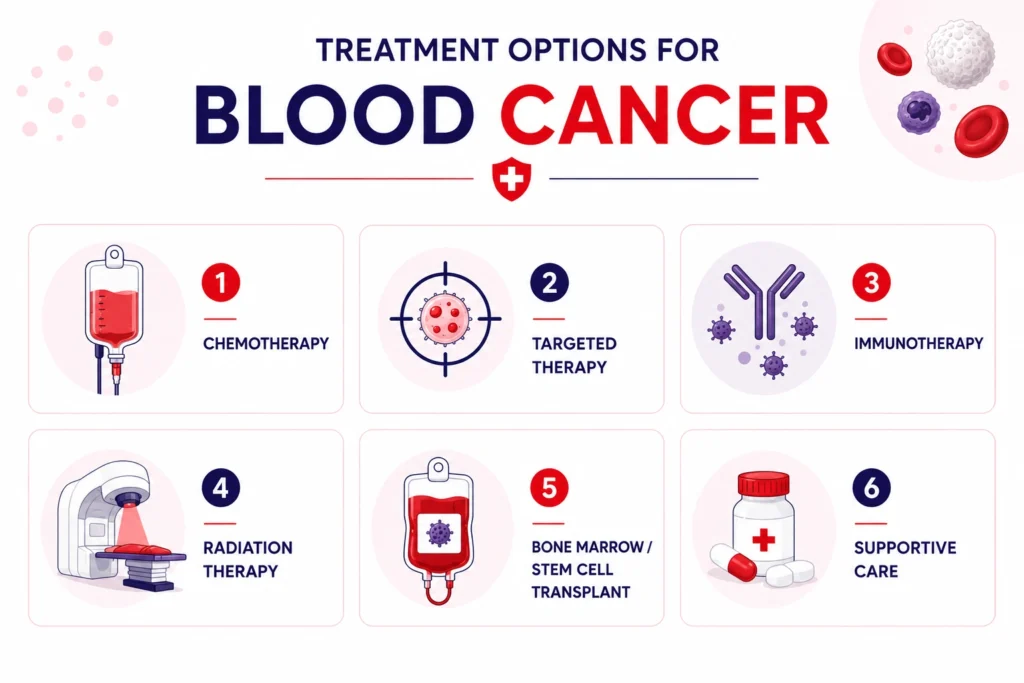
Chemotherapy
Chemotherapy uses medications to destroy rapidly dividing cancer cells or stop them from growing further. It works by targeting cells throughout the body, making it effective for many types of blood cancer, and is often used as a primary treatment or in combination with other therapies.
Targeted Therapy
Targeted therapy uses medications designed to act on specific genetic mutations or proteins involved in cancer cell growth. It works by interfering with the particular pathways that allow cancer cells to survive and multiply, and is suitable for patients whose blood cancer has an identifiable molecular target, such as certain cases of CML or AML.
Immunotherapy
Immunotherapy helps the body's own immune system recognize and attack cancer cells more effectively. It works by boosting or redirecting immune responses against cancer cells, and is used for selected blood cancers, including certain lymphomas and leukemias, often when other treatments have not achieved the desired response.
CAR T-Cell Therapy
CAR T-Cell Therapy is an advanced form of immunotherapy that involves modifying a patient's own T-cells to better recognize and destroy cancer cells. It works by re-engineering these cells in a lab and reintroducing them into the body, and is typically considered for patients with certain relapsed or treatment-resistant blood cancers.
Bone Marrow Transplant (Autologous & Allogeneic)
A bone marrow transplant replaces diseased or damaged bone marrow with healthy stem cells, either from the patient's own body (autologous) or a matched donor (allogeneic). It works by restoring the bone marrow's ability to produce healthy blood cells, and is recommended for eligible patients with certain leukemias, lymphomas, multiple myeloma, or high-risk MDS.
Supportive Care & Blood Transfusion Therapy
Supportive care encompasses treatments that manage symptoms, side effects, and complications arising from blood cancer or its treatment, including blood transfusions. It works by maintaining blood counts, preventing infections, and improving overall well-being, and is an important part of care for patients undergoing active treatment or recovery.
Recovery & Long-Term Care
What to Expect After Treatment
Recovery varies depending on the type of blood cancer and treatment received, with most patients gradually regaining strength through close monitoring for treatment response and relapse.
The Role of Rehabilitation
Rehabilitation, nutritional support, and physical activity guidance help patients rebuild strength and manage fatigue after treatment or bone marrow transplant.
Managing Side Effects & Immune Recovery
The immune system may take time to recover after chemotherapy, immunotherapy, or transplant. Patients receive guidance on infection prevention and vaccination during this period.
Follow-Up & Long-Term Monitoring
Regular follow-ups, blood tests, and imaging help monitor recovery and detect early signs of relapse, ensuring long-term remission.
Why Patients Choose Dr. Sanjeev Kumar Sharma?
20+ Years of Clinical Experience in Hemato-Oncology & Bone Marrow Transplant
1,000+ Bone Marrow Transplants Performed, including both autologous and allogeneic procedures
Expertise Across the Full Spectrum of Blood Cancers - Leukemia, Lymphoma, Multiple Myeloma, MDS, and MPNs
Advanced Treatment Capabilities, including CAR T-Cell Therapy, Targeted Therapy, and Immunotherapy
Personalized, Evidence-Based Treatment Plans Focused on Long-Term Outcomes
Frequently Asked Questions
Everything you need to know before your consultation
What is blood cancer and how is it treated? expand_more
Blood cancer, including leukemia, lymphoma, and multiple myeloma, affects blood cell production. Treatment may include chemotherapy, targeted therapy, immunotherapy, or bone marrow transplant.
What is the best treatment for leukemia? expand_more
Treatment depends on the type of leukemia and may include chemotherapy, targeted therapy, or bone marrow transplant.
Who is the best hemato-oncologist in Delhi NCR? expand_more
Dr. Sanjeev Kumar Sharma, Principal Director of Hemato-Oncology & BMT at Paras Health Gurugram, is a leading hemato-oncologist in Delhi NCR.
When should I see a hemato-oncologist for blood cancer symptoms? expand_more
Consult a hemato-oncologist if you have persistent fatigue, unexplained bruising, recurrent infections, night sweats, or swollen lymph nodes.
Can bone marrow transplant cure blood cancer? expand_more
Yes. For many patients with leukemia, lymphoma, or multiple myeloma, bone marrow transplant can lead to long-term remission or cure.
Is CAR T-cell therapy available in Delhi NCR? expand_more
Yes. CAR T-Cell Therapy is available in Delhi NCR for eligible patients with relapsed or treatment-resistant blood cancers.
What is the difference between leukemia, lymphoma, and multiple myeloma? expand_more
Leukemia affects white blood cells and bone marrow, lymphoma affects the lymphatic system, and multiple myeloma affects plasma cells.
What is the difference between Myeloproliferative Neoplasms and Myelodysplastic Syndrome? expand_more
MPNs cause the bone marrow to produce too many blood cells, while MDS involves poorly formed or dysfunctional blood cells.
What is the success rate of bone marrow transplant? expand_more
Success rates vary by cancer type, stage, and patient factors, with many patients achieving long-term remission.
Where can I get advanced blood cancer treatment in Delhi NCR or Gurugram? expand_more
Dr. Sanjeev Kumar Sharma offers advanced blood cancer treatment, including bone marrow transplant and CAR T-Cell therapy, at Paras Health, Gurugram.
 WhatsApp