
Multiple Myeloma Treatment in Delhi-NCR
It often starts with something small, persistent back pain, unusual fatigue, a blood test that raises a flag. Then comes the word “myeloma,” and suddenly everything feels unfamiliar: the terminology, the tests, the treatment choices ahead. For many patients and families, this is the point where questions start outnumbering answers; is it serious, how fast does it move, what does treatment even involve?
Understanding your multiple myeloma treatment options in Delhi-NCR early on is one of the most important steps toward feeling in control again, and having the right specialist beside you makes that first step far less overwhelming. Dr. Sanjeev Kumar Sharma, Principal Director of Hemato-Oncology & BMT at Paras Health, Gurugram, brings over 20 years of clinical experience in blood cancer care and bone marrow transplant to patients across the region.
On this page, you’ll find a clear, step-by-step breakdown of what multiple myeloma is, the early symptoms to watch for, how the condition is diagnosed, and the range of treatment options available in Delhi-NCR, from induction therapy and stem cell transplant to newer immune-based treatments. Whether you’re newly diagnosed, seeking a second opinion, or supporting a family member through this journey, this guide is designed to help you understand what lies ahead and know exactly what to ask at your first consultation.
What Is Multiple Myeloma?
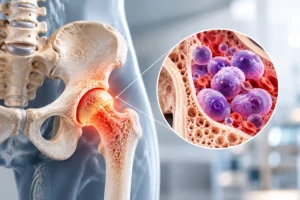
Multiple myeloma is a type of blood cancer that begins in plasma cells, the white blood cells responsible for making antibodies. When these cells grow abnormally in the bone marrow, they crowd out healthy blood cells and can weaken bones, affect kidney function, and lower immunity.
- Plasma cells multiply uncontrollably inside the bone marrow
- Abnormal proteins (M-protein) build up in the blood and urine
- Bones, kidneys, and the immune system are commonly affected
Unlike solid tumours, multiple myeloma is a bone marrow-based cancer, which is why treatment often involves a hemato-oncologist rather than a general oncologist.
What Are the Early Signs and Symptoms of Multiple Myeloma?
Multiple myeloma often develops slowly, and early symptoms are easy to mistake for age-related aches or fatigue, which is why many cases are diagnosed only after a routine blood test flags an abnormality.
Common early signs include:
- Persistent bone pain, especially in the back, hips, or ribs
- Unexplained fatigue or weakness
- Frequent infections
- Unusual bruising or bleeding
- Excessive thirst, nausea, or confusion (linked to high calcium levels)
- Swelling in the legs or reduced urine output (linked to kidney involvement)
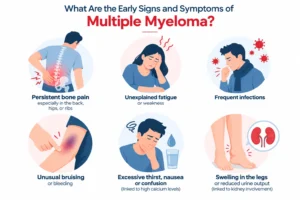
None of these symptoms confirm multiple myeloma on their own, but persistent or overlapping symptoms deserve a proper hemato-oncology evaluation rather than being dismissed as general fatigue.
Reach Out for Expert Care
How Is Multiple Myeloma Diagnosed?
Diagnosing multiple myeloma accurately requires a combination of blood work, imaging, and bone marrow evaluation, not a single test.
At Dr. Sharma’s clinic, diagnosis typically includes:
- Blood and urine tests to detect abnormal proteins (M-protein, free light chains)
- Bone marrow biopsy and aspiration to confirm plasma cell involvement
- Imaging (PET-CT, MRI, or whole-body low-dose CT) to check for bone lesions
- Cytogenetic and FISH testing to assess disease risk and guide treatment choice
A precise diagnosis at this stage determines everything that follows, from staging the disease to selecting the right treatment combination, which is why patients are advised against starting treatment elsewhere without this full workup.
What Are the Treatment Options for Multiple Myeloma in Delhi-NCR?
Multiple myeloma treatment has moved well beyond standard chemotherapy, today’s approach combines newer drug classes with, where appropriate, stem cell transplantation, tailored to each patient’s age, health, and disease risk.
- Induction Therapy (Combination Drug Regimens)
Most patients begin with a combination of:
- Proteasome inhibitors
- Immunomodulatory drugs
- Monoclonal antibodies
- Corticosteroids
These combinations (often three or four drugs together) aim to bring the disease under control before further treatment.
- Autologous Stem Cell Transplant (ASCT)
For eligible patients, high-dose therapy followed by a transplant using the patient’s own stem cells can extend remission significantly. This remains one of the most effective options for transplant-eligible patients in India. - Maintenance Therapy
After induction (with or without transplant), long-term maintenance therapy helps keep the disease in remission and delay relapse. - Newer Immune-Based Therapies
For relapsed or harder-to-treat cases, options such as CAR-T cell therapy and bispecific antibodies are reshaping outcomes globally and are increasingly accessible through specialised centres. - Supportive Care
Bone-strengthening medication, pain management, and infection prevention are built into the treatment plan from day one, not added as an afterthought.
The right combination isn’t the same for every patient; age, kidney function, genetic risk factors, and transplant eligibility all shape the final plan.
Is Bone Marrow Transplant Necessary for Multiple Myeloma?
Not every multiple myeloma patient needs a bone marrow transplant, but for those who are eligible, it remains one of the strongest tools for extending remission.
Transplant eligibility generally depends on:
- Patient age and overall fitness
- Kidney and heart function
- Response to initial induction therapy
- Presence of other health conditions
For patients who aren’t transplant candidates, modern drug combinations alone can still achieve strong, lasting disease control. Transplant eligibility is a decision made jointly between the patient and their hemato-oncologist after reviewing test results, never a default step.
What Determines the Right Treatment Plan for a Multiple Myeloma Patient?
No two multiple myeloma cases are treated identically, the right plan depends on how the disease behaves in that specific patient, not just its stage at diagnosis.
Key factors include:
- Disease stage and risk category (based on genetic and blood markers)
- Age and overall organ function
- Transplant eligibility
- Presence of bone or kidney complications
- Patient’s personal treatment goals and tolerance for side effects
This is why a detailed initial workup matters more than a quick prescription, it shapes a treatment path built around the individual, not a one-size-fits-all protocol.
Reach Out for Expert Care
What Is the Cost of Multiple Myeloma Treatment in Delhi-NCR?
We know cost is one of the first questions on every family’s mind. Multiple myeloma treatment cost in Delhi-NCR depend on the stage of the disease, the drug combination used, and whether a stem cell transplant is needed. Induction therapy (the initial drug-based treatment) typically costs ₹1–3 lakh per cycle, with a full induction course averaging ₹8–15 lakh. An autologous stem cell transplant adds approximately ₹8–18 lakh, while newer options like CAR T-cell therapy or bispecific antibodies, where suitable, can range from ₹35–45 lakh.
Key factors that affect multiple myeloma treatment cost include:
- Stage and risk category of the disease at diagnosis
- Type of treatment; induction therapy, maintenance therapy, stem cell transplant, or newer immune-based options
- Number of treatment cycles required
- Hospital stay and post-transplant monitoring
- Insurance coverage
- Government schemes or NGO support for eligible patients
Why Choose Dr. Sanjeev Kumar Sharma for Multiple Myeloma Treatment in Delhi-NCR?
Choosing where to be treated for a blood cancer like multiple myeloma matters as much as choosing what treatment to receive.
Dr. Sanjeev Kumar Sharma offers:
- Over 20 years of dedicated experience in hematology and blood cancer care
- Specialised expertise in bone marrow transplant and complex myeloma cases
- A patient-first approach with clear communication about treatment choices and expected outcomes
- Access to advanced diagnostics and transplant facilities at Paras Health, Gurugram
- Coordinated, multidisciplinary care spanning diagnosis, treatment, and long-term monitoring
For patients across Delhi, Gurugram, Noida, Faridabad, and the wider NCR region, this means specialist-level myeloma care without needing to travel outside the region.
How Can You Book a Consultation for Multiple Myeloma Treatment?
Getting a second opinion or starting treatment begins with a single consultation, where your existing reports (if any) are reviewed before any further tests are recommended.
To book an appointment with Dr. Sanjeev Kumar Sharma at Paras Health, Gurugram, patients can call the clinic directly or use the appointment request form on this website. Carrying prior blood work, biopsy reports, or imaging (if available) helps make the first consultation more productive.
Medical Disclaimer: The information on this page is provided for educational purposes only and should not be used as a substitute for medical advice. Treatment recommendations vary from person to person and should always be based on an individual consultation and clinical evaluation by a qualified healthcare professional.
Frequently Asked Questions
Is multiple myeloma curable? expand_more
Multiple myeloma is generally considered a treatable but currently not fully curable cancer. With modern therapies, many patients achieve long periods of remission where the disease is well controlled, and ongoing research continues to extend these outcomes further.
Does multiple myeloma run in families? expand_more
Multiple myeloma is not typically classified as a hereditary cancer, though having a first-degree relative with the condition may slightly raise individual risk. Most cases occur without any known family history.
What is the approximate cost of multiple myeloma treatment in Delhi-NCR? expand_more
Treatment cost varies widely based on the drugs used, whether a stem cell transplant is required, and the length of treatment.
What kind of diet should a multiple myeloma patient follow? expand_more
There's no single prescribed "myeloma diet," but doctors generally recommend a protein-rich, well-balanced diet, adequate hydration, and food safety precautions during periods of low immunity. Any specific dietary changes should be discussed with the treating oncologist, especially around kidney function and calcium levels.
Can a person live a normal life after multiple myeloma treatment? expand_more
Many patients return to most daily activities during remission, though regular follow-up visits, blood tests, and maintenance therapy typically continue long-term to monitor for relapse.

Medical Content Grounded in Clinical Expertise
Medical information on this website is developed with a focus on clinical accuracy, current evidence, and patient understanding. Complex topics in haematology, blood disorders, and bone marrow transplantation are presented in clear, accessible language, with medical content carefully researched and reviewed to ensure it remains reliable, relevant, and useful for patients and their families.
 WhatsApp