
Chemotherapy in Delhi-NCR
Chemotherapy is a widely used and effective treatment for blood cancer, including leukemia, lymphoma, and multiple myeloma. It works by destroying or slowing the growth of cancer cells and may be given as tablets, an injection, or an IV drip, often in cycles with rest periods in between. Dr. Sanjeev Kumar Sharma offers personalised chemotherapy treatment for blood cancer in Gurgaon, with plans tailored to each patient’s diagnosis, stage, and overall health.
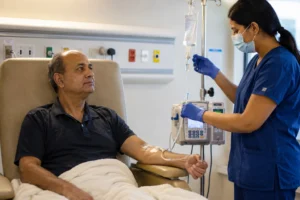
A blood cancer diagnosis often brings a lot of questions, and chemotherapy is usually one of the first treatments patients hear about. In simple terms, chemotherapy uses medication to target and destroy abnormally growing cancer cells, which is how leukemia, lymphoma, and multiple myeloma typically behave. It may be used on its own or alongside treatments such as targeted therapy, immunotherapy, or bone marrow transplant, depending on your specific diagnosis.
Dr. Sanjeev Kumar Sharma, Principal Director, Hemato-Oncology & BMT at Paras Health Gurugram, offers personalised chemotherapy treatment for blood cancer patients in Gurgaon, guiding patients through every stage, from diagnosis to recovery. If you or a loved one has been recently diagnosed with blood cancer, this page will help you understand how chemotherapy works, what to expect, its cost and success rate, and how to find the right specialist in Gurgaon.
What is Chemotherapy for Blood Cancer?
Chemotherapy for blood cancer uses powerful medications to target and destroy rapidly dividing cancer cells, which is how leukemia, lymphoma, and multiple myeloma cells typically behave. Since it travels through the bloodstream, it works well for blood cancers that affect the whole body rather than one specific area.
Depending on the type and stage of blood cancer, treatment may involve oral chemotherapy for leukemia, an injection, or an IV drip. Protocols vary by condition; chemotherapy drugs for CML leukemia differ from those used for acute lymphocytic leukemia or childhood leukemia, and chemotherapy for lymphoma or multiple myeloma follows its own tailored plan. It’s usually given in stages, as cycles with rest periods in between so the body can recover, and is sometimes used before a bone marrow transplant to prepare the body for new stem cells.
How Chemotherapy Helps Treat Different Blood Cancers?
Chemotherapy treatment for leukemia, lymphoma, and multiple myeloma is tailored to each patient’s specific condition, stage, and overall health, giving the best possible chance at recovery.
Chemotherapy for Leukemia
Chemotherapy is often the first-line treatment for both acute and chronic leukemia, including acute lymphocytic leukemia and CML. Treatment plans and drug combinations are tailored to the exact subtype and how the disease is behaving.
Chemotherapy for Lymphoma
For Hodgkin and Non-Hodgkin Lymphoma, chemotherapy is commonly used to shrink or eliminate cancerous cells in the lymphatic system, often combined with other therapies for the best outcome.
Chemotherapy for Multiple Myeloma
Chemotherapy helps control the growth of abnormal plasma cells in multiple myeloma and is often used to prepare patients for a bone marrow transplant.
Chemotherapy Before Bone Marrow Transplant
High-dose chemotherapy, also called conditioning therapy, is used before a bone marrow transplant to clear diseased cells from the bone marrow and prepare the body to accept new, healthy stem cells.
Chemotherapy for Childhood Leukemia
Children with leukemia often respond very well to chemotherapy, with treatment protocols specifically designed around a child’s age, weight, and overall health.
Reach Out for Expert Care
Common Chemotherapy Protocols for Blood Cancer
The specific chemotherapy protocol used depends on the type of blood cancer being treated:
- Acute Myeloid Leukemia (AML) is most commonly treated with the “3+7” induction regimen, though options like HAM, FLAG-Ida, or Decitabine/Azacytidine-based protocols may also be used depending on the patient’s condition.
- Acute Lymphoblastic Leukemia (ALL) is typically treated with a combination of drugs, including steroids, Vincristine, Daunorubicin, Asparaginase, Cyclophosphamide, Cytarabine, and 6-MP.
- Non-Hodgkin Lymphoma is commonly treated with R-CHOP or DA-EPOCH-R.
- Hodgkin Lymphoma is most often treated with the ABVD protocol.
- Multiple Myeloma is usually treated with a combination of 3-4 drugs, such as VRD, VCD, VTD, Mel-Dexa, Daratumumab-based regimens, or Bendamustine.
In select cases, chemotherapy is given intrathecally (directly into the fluid around the spinal cord and brain) to prevent or treat disease affecting the brain.
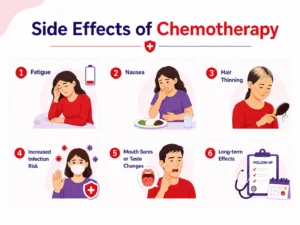
Side effects can vary depending on the specific drugs, dosage, and how long treatment lasts. Common ones include nausea, vomiting, mouth ulcers, hair loss, and elevated blood sugar, while less common effects may involve the kidneys, liver, heart, lungs, or brain.
How is Chemotherapy Given?
Chemotherapy for blood cancer follows a structured process, from initial diagnosis to ongoing supportive care, ensuring each patient’s treatment stays on track and adjusts as needed. Here’s what the treatment journey typically looks like:
Step 1: Diagnosis & Evaluation – Blood tests, bone marrow biopsy, and imaging confirm the type and stage of blood cancer.
Step 2: Treatment Planning – A chemotherapy protocol is chosen based on the cancer type, stage, and the patient’s overall health.
Step 3: Administration – Chemotherapy is given as oral tablets, an injection, or through an IV drip, either as an outpatient or with a short hospital stay.
Step 4: Cycles & Monitoring – Treatment is given in cycles with rest periods in between, with regular blood tests to monitor response and adjust the plan if needed.
Step 5: Supportive Care – Medications and guidance are provided to manage side effects and support the body through treatment.
Is Chemotherapy Painful? What to Expect
One of the most common questions patients have before starting chemotherapy treatment for leukemia, lymphoma, or multiple myeloma is whether the procedure itself will hurt. Chemotherapy itself is not typically painful; most patients describe the IV or injection as similar to a routine blood draw, and oral chemotherapy for leukemia simply involves taking prescribed tablets at home.
That said, chemotherapy can cause side effects such as fatigue, nausea, hair loss, and a temporarily weakened immune system, since treatment affects the whole body rather than just one area. These effects vary from person to person and are managed with supportive medications, dietary guidance, and close monitoring throughout treatment. A consultation with a hemato-oncology specialist in Gurgaon can help you understand what to expect for your specific diagnosis.
Chemotherapy vs Targeted Therapy
| Feature | Chemotherapy | Targeted Therapy |
| How it Works | Destroys rapidly dividing cells throughout the body | Targets specific genetic mutations or proteins in cancer cells |
| Precision | Broader action, affects healthy cells too | More precise, spares more healthy cells |
| Side Effects | Fatigue, nausea, hair loss, lowered immunity | Generally milder, varies by drug |
| Common Uses | Most leukemias, lymphomas, multiple myeloma | Selected cases with an identifiable genetic target (e.g., CML) |
| Treatment Goal | Broad-based cancer cell destruction | Targeted disruption of cancer growth pathways |
What is the Cost of Chemotherapy for Leukemia in Gurgaon?
The cost of chemotherapy for leukemia in Gurgaon depends on several factors and varies from patient to patient. A consultation with Dr. Sanjeev Kumar Sharma can help determine an accurate estimate based on your specific treatment plan.
Factors That Influence Cost:
- Type and stage of blood cancer
- Number of chemotherapy cycles required
- Specific drugs or drug combinations used
- Whether treatment is outpatient or requires hospital admission
- Need for supportive care or additional medications
- Follow-up tests and monitoring requirements
Why Choose Dr. Sanjeev Kumar Sharma for Chemotherapy in Gurgaon?
Choosing the right hemato-oncology specialist in Gurgaon can make a real difference in how a patient experiences chemotherapy treatment for leukemia, lymphoma, or multiple myeloma. Dr. Sanjeev Kumar Sharma brings extensive clinical experience and a personalised, patient-first approach to every stage of care, from diagnosis through recovery.
Why patients choose Dr. Sanjeeev Kumar Sharma?
- 20+ Years of Experience in Hemato-Oncology & Bone Marrow Transplant
- Personalised chemotherapy protocols based on cancer type and individual patient needs
- Comprehensive supportive care to manage side effects throughout treatment
- Seamless coordination between chemotherapy, targeted therapy, and bone marrow transplant when needed
Reach Out for Expert Care
Is Chemotherapy Right for You?
Deciding on the right treatment path after a blood cancer diagnosis can feel overwhelming, but understanding your options is a good first step. You or your loved one may be a candidate for chemotherapy if:
- You have been recently diagnosed with leukemia, lymphoma, or multiple myeloma
- Your doctor has recommended treatment before a bone marrow transplant
- You are looking for a treatment plan personalised to your specific diagnosis
- You want a specialist who can coordinate chemotherapy with other advanced treatments if needed
Take the Next Step Toward Recovery
Facing a blood cancer diagnosis can feel overwhelming, but the right treatment plan and specialist support can make a real difference. Consult Dr. Sanjeev Kumar Sharma for a personalised chemotherapy treatment plan designed around your diagnosis and recovery goals.
Medical Disclaimer: The information on this page is provided for educational purposes only and should not be used as a substitute for medical advice. Treatment recommendations vary from person to person and should always be based on an individual consultation and clinical evaluation by a qualified healthcare professional.
FAQ's
What is chemotherapy and how does it treat blood cancer? expand_more
Chemotherapy uses medications to destroy or slow the growth of cancer cells and is one of the main treatments for leukemia, lymphoma, and multiple myeloma.
How is chemotherapy given for leukemia, and is it painful? expand_more
Chemotherapy is given as tablets, an injection, or an IV drip, and the procedure itself is not typically painful, though it may cause side effects like fatigue and nausea.
What is the cost of chemotherapy for leukemia in Gurgaon? expand_more
The cost depends on the type and stage of leukemia, number of cycles, and specific treatment plan, and is best confirmed during a consultation.
What is the success rate of chemotherapy for leukemia? expand_more
Success rates vary by leukemia type and stage, with many patients achieving remission, especially when diagnosed early.
What are the side effects of chemotherapy for leukemia? expand_more
Common side effects include fatigue, nausea, hair loss, and increased infection risk, most of which are manageable with supportive care.

Medical Content Grounded in Clinical Expertise
Medical information on this website is developed with a focus on clinical accuracy, current evidence, and patient understanding. Complex topics in haematology, blood disorders, and bone marrow transplantation are presented in clear, accessible language, with medical content carefully researched and reviewed to ensure it remains reliable, relevant, and useful for patients and their families.
 WhatsApp